Fermentation & Processing
From pod to dry bean.
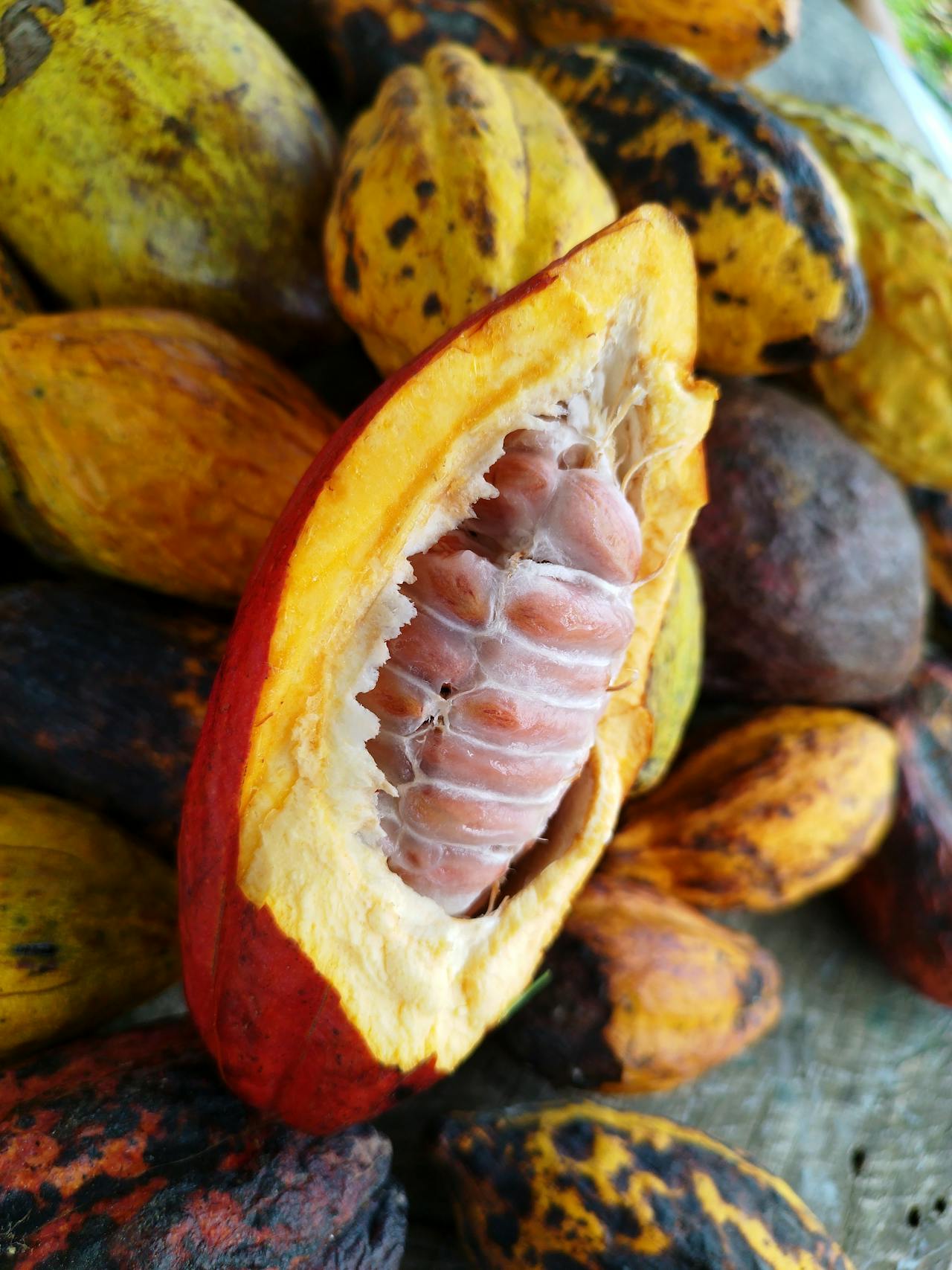
The flavour of cacao is not fully decided by genetics. A large part of it is created after harvest, during fermentation and drying, by steps that turn a bitter, astringent seed into something recognisably chocolatey. Understanding that chain explains why two estates with the same planting material can produce very different cacao.
Harvest and pod breaking
Harvest begins when pods are ripe, judged mainly by colour change and a hollow sound when tapped. Under-ripe pods carry too little pulp and sugar; over-ripe pods risk germinated or diseased seeds. Ripe pods are usually broken within a few days. Pod breaking opens the fruit by hand — a blunt tool or wooden club avoids cutting the seeds — and the wet seeds, still coated in pulp, are scooped out while the husk and central placenta are discarded.
The role of pulp
Each fresh seed is wrapped in sweet, sugar-rich, acidic pulp, or mucilage. This pulp is the fuel for fermentation. It is not the seed itself that ferments in the usual sense; rather, microbes consume the pulp surrounding the seed, and the by-products of their activity penetrate the seed and trigger chemical change inside it.
Fermentation
Fermented beans are piled in heaps covered with leaves, or placed in slatted wooden boxes — sweatboxes — that allow drainage and airflow. Boxes give more even, controllable results; heaps are simple and inexpensive.
Fermentation follows a microbial succession. In the first, oxygen-poor stage, yeasts and lactic acid bacteria break down sugars, producing ethanol and lactic acid and beginning to drain the pulp. As the mass loosens and is aerated, acetic acid bacteria take over, oxidising ethanol to acetic acid and releasing heat. Temperatures commonly climb past 45 to 50 degrees Celsius. This heat and acidity kill the seed embryo and drive the reactions that generate flavour precursors and reduce astringency.
Turning the mass — typically every day or two — aerates it and evens out temperature, encouraging the acetic phase. Fermentation usually runs about four to seven days. White- or pale-bean cacao, such as much Criollo-type material, generally needs a shorter fermentation than the purple-bean cacao typical of Amazonian populations, whose higher polyphenol content takes longer to mellow. Over-fermentation produces hammy, putrid off-flavours; under-fermentation leaves beans astringent and slaty.
A cut test checks progress: beans are sliced lengthwise, and well-fermented beans show brown, open, fissured cotyledons rather than dense purple or grey slate.
Drying
Drying lowers moisture so beans can be stored and shipped, and it lets residual acetic acid escape while flavour development continues. Sun drying on raised beds or patios is most common, with a moisture target of roughly 6 to 7 percent. Drying too fast traps acidity and bitterness inside the bean; drying too slowly invites mould and off-flavours. Smoke contamination and poor airflow leave lasting defects.
Together, fermentation and drying determine much of the final character of cacao. Genetics sets the potential; post-harvest practice decides how much of it reaches the bar.